

Digital Exclusive—Endress+Hauser: Driving sustainable transformation together
Hydrocarbon Processing (HP) had the opportunity to speak with Endress+Hauser CEO Dr. Peter Selders (PS) to discuss the latest trends and the company’s approach to present and future challenges across the various industries it serves.
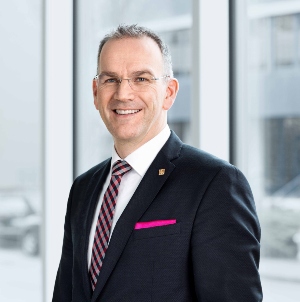
Dr. Peter Selders has been CEO of the Endress+Hauser Group since 2024. Previously, he worked at Endress+Hauser Level+Pressure in Maulburg, Germany, becoming Managing Director in 2019. With a doctorate in physics, he gained his first professional experience in the semiconductor industry. This was an environment shaped by short-term business cycles and stock prices. Seeking a change, he decided to switch to Endress+Hauser, a family-owned company, so he could devote himself to long-term objectives. Dr. Selders is married and the proud father of five children.
HP: One of the things that Endress+Hauser is focused on is what the company calls, “Driving sustainable transformation together.” Can you elaborate a bit more on that philosophy and how it pertains to your mission, strategies and business relationships?
PS: For us—meaning Endress+Hauser, our partners, suppliers and customers—transformation is not optional, and definitely not something any of us can take for granted. We face many challenges together: volatility in energy markets, supply chains and regulations; the acceleration of technology, especially within the field of artificial intelligence (AI) and digitalization; increased expectations regarding responsibility and transparency; and changing geopolitics, which have moved from being a topic of consensus and generalities to individual targets, and day-to-day actions and decisions that have a huge impact on global management. For us, success and sustainability are not competing priorities. Sustainable transformation means embedding sustainability into operations rather than adding it.
Sustainability is essential, because only through sustainability will life on our planet remain worth living in the future. As a company, we want to do our part by becoming more sustainable ourselves as well as supporting our customers on their journey toward sustainability. It was for this dual leverage effect that we were presented with the German Sustainability Award in 2025. In the latest EcoVadis sustainability rating, we placed among the top 6% of rated companies.
In 2023, Endress+Hauser joined the Science Based Targets initiative (SBTi). We have committed to reducing our greenhouse gas emissions to net zero by 2050. This is a challenging goal because we want to achieve it regardless of our company’s growth, and across the entire value chain.
More than 97% of our carbon dioxide (CO2) emissions come from what is known as Scope 3, that is, from upstream and downstream value chains. We are talking about how our customers use our products, often for decades, or about the steel and aluminum we use in our instruments.
To make a difference in this area, we need to take a long-term approach, for example by reducing the energy consumption of our instruments or minimizing the use of materials starting from the design phase. To this end, we have drafted guidelines for eco-design, ensuring that our development teams keep the carbon footprint of new products in mind from the very beginning.
We see the sustainable transformation of the process engineering industry as a major opportunity for our business. The goal is to make processes energy- and resource-efficient, and to improve, adapt or completely redesign them to reduce CO2 emissions and enable a circular economy. Our measurement technology helps with that.
However, sustainable transformation will only succeed if we make it competitive. This also applies to our products. Few customers are willing to pay a premium solely for sustainability. That is why we need to combine increased sustainability in our products with added value: more features, less material used, smaller dimensions.
HP: How can the process industry achieve sustainable transformation in an increasingly challenging global environment?
PS: This is a question to which we are devoting considerable attention and energy—within our own organization as well as with our customers and partners. The industry has set out on a long journey. The goal? Net-zero emissions combined with commercial success. This journey is turning out to be more and more of an adventure, not least because conditions can change suddenly and unpredictably. Again and again, we come up against new geopolitical, regulatory and economic issues.
We want companies to drive change successfully, meaning in a way that creates value, improves competitiveness and enables advancement. Efficiency and digitalization are key factors here, but perhaps the most important factor is collaboration.
HP: How can companies overcome these challenges?
PS: No company can overcome today’s challenges on its own. Open dialogue, shared knowledge and partnerships founded on trust help us steer a sure course through uncertain times, master complexity and innovate. Only through working together can we turn major structural changes into opportunities. It is important to encourage exchange between leaders who are facing similar challenges across industries and regions. Sustainability, therefore, requires innovation as well as collaboration.
HP: Endress+Hauser began as, and remains, a family business. How does this shape your values, strategies and goals?
PS: As a family-owned business, we think long term and take responsibility for future generations—sustainability is by nature a long-term commitment. This perspective has served as an anchor of our values and is an essential part of our DNA. Our perspectives and values, developed over the last 73 years, shape our priorities, priorities shape operations, and operations determine impact. To achieve this, you need leadership, and this is how our executive board approaches and guides our business. What got us started was our shared vision, but what will get us to our destination is the quality of our teamwork. Our shareholder family keeps us grounded here, making our family-owned company a bastion of stability in uncertain times. This enables us to keep our balance, hold fast to our core strengths and continue to grow one sure step at a time. Our solidarity, cohesion, and shared values and aims are sources of great strength.
HP: 2025 was a year of strong headwinds. How did the financial year play out for Endress+Hauser?
PS: Many different factors have influenced our business performance; of course, that is always the case. But in 2025, these effects were particularly pronounced. The war in Ukraine, the energy crisis in Europe, the tariffs dispute with the U.S. and tensions with China: all of these are having an impact, both regionally and globally. These factors throw markets off balance, cause prices to rise and fall, disrupt supply chains and create uncertainty—an environment where things change rapidly and no one knows what tomorrow will bring. At the same time, we are experiencing technological disruptions, social change and environmental challenges.
In a complex situation like this, making the right decisions and doing the right thing are not always easy. On one hand, we must overcome short-term challenges; on the other, we need to lay the groundwork for long-term success.
In 2025, the Group generated a record €4 billion in sales. It’s a major achievement, we view 2025 as a solid year, and we’re proud of it; however, we still fell short of our targets. This was due mainly to exchange rate effects—currency conversion into euros cost us more than 3% of growth. The fact that we held steady despite this is thanks to the expanded gas analysis and flow measurement technology business from our partnership with German sensor manufacturer SICK. Incoming orders and sales there are stable, which is very pleasing.
Meanwhile, sales in our established business areas were slightly down year-on-year. We really felt the effects of investment restraint in the chemical industry, which is grappling with overcapacity, and well as cyclical weakness in key markets like China and Germany. This was only partially offset by growth from other industries and countries. Even if these figures are not quite what we’re used to, we still achieved a good level of profitability, and that means we can continue to invest in the future.
HP: Can you tell us a little bit more about the acquisition of SICK’s gas business and its effects on your business?
PS: The core of the partnership is that gas analysis and gas measurement technology will be sold exclusively through Endress+Hauser. The acquisition expands our product portfolio to include instruments and systems that are used in waste-to-energy plants, power plants, steel mills and cement plants, as well as in the oil and gas industry, chemical and petrochemical facilities, and the maritime sector, where they measure parameters like the flowrate of natural gas and hydrogen or the emissions in flue gas. Our customers use these instruments to increase the efficiency of their facilities, ensure regulatory compliance and decarbonize their processes.
This acquisition was on a completely new scale for us. More than 1,000 employees on our side alone prepared for the business takeover and did everything they could to ensure that customers were affected as little as possible. In that regard, I think we did an excellent job.
Sales and service staff in 46 countries have joined our company. People from both companies have really started to work well together over the past few months because they realize that what we are doing here makes a lot of sense.
Gas analysis and gas measurement technology played a key role in our success last year. Order intake and revenue are developing well. The next step is to take full advantage of our expanded offerings. Sales and service are in the hands of specialized teams. In collaboration with other departments, we aim to generate additional business and develop new applications.
About two-thirds of the new jobs Endress+Hauser created in 2025 are related to the new gas business. More than 800 sales and service representatives worldwide have transferred from SICK to Endress+Hauser, not including the more than 700 employees of the joint venture, which produces and develops equipment exclusively for us with five locations in Germany. In our core business, we have created positions where growth in sales and production or our strategic development has made it necessary.
HP: Throughout industry, we are seeing a focus on preparing the next generation to take the reins, so to speak, and propel innovation. How is Endress+Hauser contributing to this?
PS: We have further strengthened our commitment to training and vocational education. We are exporting dual vocational training programs—which have been tried and tested in Germany, Switzerland and Austria and combine theoretical instruction with practical experience—to countries around the world.
We now offer industrial training programs in India, the U.S. and, most recently, China. By the end of 2025, 676 young people worldwide were in professional training at Endress+Hauser, studied with us at a university, or were on a long-term internship with us as part of their studies.
Everything that Endress+Hauser stands for—our commitment to our customers, the quality of our products, our technological leadership, and the culture that shapes our business and our interactions—depends entirely on the people who work with us. That is why it is important to find the right people at every level and retain them. We need to ensure that enough young talent joins us and has the opportunity to grow here to accomplish this. A particular challenge in the coming years will be to successfully manage the generational transition in many leadership positions.
HP: In addition to your investment in people, Endress+Hauser has also made significant investments in your global network for production, sales and support.
PS: Continued success takes the right people, and it takes a good infrastructure. More money than ever before has been invested in new buildings and facilities, information technology (IT) and software. This allows us to keep our manufacturing processes up to date and ensures that we take full advantage of technological opportunities offered by digitalization and AI, for example.
Most noticeable are the new buildings. We opened two of them in Germany last year. In Nesselwang, we have established a product and development center for temperature measurement technology and system products. A large new production facility has been built in the Waldheim, where we manufacture sensors for liquid analysis, particularly glass pH sensors.
Worldwide, around 30 investment projects totaling nearly €680 million are now in the planning or implementation stages. The biggest one concerns our location in Maulburg in Germany. We are investing nearly €120 million to ensure the long-term future of our product center for level and pressure measurement technology. Another large production facility is being built in Suzhou, China.
Analytik Jena is constructing two new buildings in Germany: at its headquarters in Jena and a new production facility in Ilmenau. Toward the end of last year, we began planning a new corporate campus in Freiburg, Germany, where we are creating space for our IT department, our joint venture in gas analysis and gas measurement technology, and a sales and service team for the gas business. We are investing in the upper double-digit millions, which is a statement about our new business segment.
On the sales side, additional buildings are being constructed in Cali, Colombia; in Greenwood, Indiana (U.S.); in Istanbul, Turkey; Edgmont, Pennsylvania (U.S.); Mumbai, India; Shanghai, China; and Vienna, Austria. At the end of 2025, our French sales division moved into a modern sales and customer service center in Cernay. Our sales center now shares the campus with the flowmeter manufacturing facility.
HP: Naturally, the two new facilities in the U.S. are expanding Endress+Hauser’s presence there. What can you tell us about them?
PS: The U.S., now by far our largest market, has performed well and we have experienced dynamic growth. The investments in the U.S. are part of the company’s long-term strategy. With the new buildings (Greenwood, Indiana and Edgmont, Pennsylvania), we are strengthening our local presence and ensuring we are close to our customers. In doing so, we are laying the foundation for sustainable growth.
We have invested some €44 million ($50.9 million) in the new facility in Greenwood, Indiana, which is the headquarters of Endress+Hauser in the U.S.. It houses the new headquarters of our long-standing sales and service representative partner George E. Booth Co., as well as modern office and workspaces for sales, service, project and solutions teams, and for the company’s central functions. The 9,800-m2 building brings together around 190 combined employees from both companies under one roof.
An integrated Design and Innovation Studio specifically promotes the development of young talent in STEM (science, technology, engineering and mathematics) fields and facilitates hands-on learning formats with a focus on collaboration with local educational institutions. Sustainable features such as a geothermal system, solar panels, rainwater management and other eco-friendly measures underscore our commitment to energy-efficient construction.
The campus also houses large production facilities for flow, level, pressure and temperature measurement technologies. We employ nearly 670 people at the site, not including employees of the sales and service representative partner office headed by George E. Booth Co.
With our long-standing sales and service partner, Eastern Controls LLC of PA, we also opened the new 8,200-m2 facility in Edgmont, just west of Philadelphia. There, approximately 90 employees from both companies support customers from various industries with process measurement technology and automation solutions, contributing to further growth in the region.
We have been active in the U.S. since 1970 and are now one of the country’s leading providers of measurement and automation technologies. We operate several production sites, including in Greenwood, Anaheim and Rancho Cucamonga (California), and Ann Arbor (Michigan), and maintain a nationwide network of our own sales and service locations. This is complemented by long-standing sales partners who ensure close customer support in the U.S.
HP: In addition to investments in people and infrastructure, R&D is obviously vital. How is Endress+Hauser investing in this area to drive innovation forward?
PS: In 2025, more than €280 million was invested in R&D, representing 7% of our revenue. The decline in this ratio compared with the previous year is solely due to accounting effects resulting from the acquisition of the gas business. The people working on new products there are not included in the more than 1,300 employees who are solely engaged in R&D at our company.
It has been 70 years now since our founder, Georg Endress, filed his first patent. Since then, innovation has been a key driver of our growth. In 2025, we filed 294 initial applications with patent offices around the world. More than 9,400 active patents and patent applications protect our intellectual property—this is despite the hundreds of intellectual property rights we allow to expire every year because they are no longer relevant to us. Our innovative spirit has gone into the 41 new products we have launched in 2025, which provide significant benefits to our customers.
HP: Sometimes it seems the future is more uncertain than ever before. What are Endress+Hauser’s priorities for 2026 and going forward?
PS: A great deal of this uncertainty comes from the war against Iran. The repeated blockage of the Strait of Hormuz and the attacks on oil and liquefied natural gas infrastructure around the Persian Gulf have caused prices to rise sharply time and again, and not just for oil and gas. Primary chemicals, fertilizers, basic plastics, metals and noble gases are also affected, as well as key raw materials used in semiconductor manufacturing.
It remains to be seen whether and how quickly the supply bottlenecks will ease. After all, many production facilities have been damaged by the war. In any case, the inflationary spiral is already in motion, and supply chains worldwide are under pressure. The risk of a global recession still exists.
We do not manufacture in the region; as of now, our supply chains are not affected. It is still possible, although sometimes more complicated, to supply customers in the Middle East. Of course, this puts our global logistics network to the test. Restrictions to air traffic and rising fuel prices have driven up transportation costs. The implications are global.
The fact is that uncertainty has continued to grow and it is bad: for the economy, for our customers’ investments and for our business. What can we, as a company, do? In such circumstances, it is important to act thoughtfully rather than hastily. We must take the time to understand and make sense of developments. Only this way can we make decisions that will remain valid in the medium and long term.
Our goal remains growth. Given what is currently happening in the world, we cannot say how successful we will be in achieving this in 2026. In the first six months, we have seen an increase in both incoming orders and net sales, partly due to our first full fiscal year with our expanded product portfolio in gas analysis and gas measurement technology. At the same time, however, exchange rate impacts are once again eating into a portion of this year’s growth.
In 2026, we will therefore focus on what has made us strong in the past and will continue to make us strong in the future: staying close to the market and our customers, delivering reliably and with high quality, expanding our network and portfolio, developing new technologies and products, seeking out opportunities for new business, and seizing them decisively wherever they arise.
I draw confidence from the fact that we are well-positioned as a company, that major issues such as security of supply, digitalization, pressure to improve efficiency, climate change and demographics are driving our business, that we are constantly working to provide even better support to our customers, and that our shareholder family provides a reliable foundation for our company.
Their goal is not short-term profit, but long-term success. That is why they give us the freedom to operate as entrepreneurs and enable us to pursue long-term goals. Our shareholders certainly have high expectations, but they also know our business and are able to understand what is happening in the market and within the company. Perhaps most importantly, they trust us—the management and the employees.
This sense of security radiates throughout the entire company. The sense of unity and community at Endress+Hauser, along with our shared values and goals, unleashes tremendous energy. This makes our family business a stable anchor amid the unrest in the world around us. We maintain a balance, build on our strengths and continue to grow step by step.
Ultimately, growth is still our goal, and I’m confident that our chances of achieving it are intact. The key is to take the time to correctly understand and assess new developments so we can make decisions that hold up over the medium to long term. It’s about taking decisive action when the time is right, rather than changing course willy-nilly every day.
I take confidence from our uncompromising focus on the customer and our absolute commitment to be a dependable and valued partner. Progress requires partnership. Demand for process measurement technology is growing. The market is still there—even in uncertain times.

Comments