

HAMR Energy secures up to $32 MM in ARENA funding to advance forestry-to-fuels projects
Leading low-carbon liquid fuels (LCLF) company HAMR Energy has welcomed up to $32 million in conditional funding from the Australian Renewable Energy Agency (ARENA) to advance its landmark projects that will transform Australian plantation forestry residues and renewable energy into sustainable aviation fuel (SAF), helping decarbonize one of the country’s most critical and hardest-to-abate sectors.
The funding was announced at Adelaide Airport by the Hon Catherine King MP, Minister for Infrastructure, Transport, Regional Development and Local Government and the Hon Chris Bowen MP, Minister for Climate Change and Energy. Also in attendance were the Hon Peter Malinauskas MP, Premier of South Australia, and the Hon Chris Picton MP, South Australian Minister for State Development.
The commitment is the first investment under the Australian Government’s $250 million Low Carbon Liquid Fuels priority, administered by ARENA through the Future Made in Australia Innovation Fund, supporting the development of a new domestic industry capable of producing lower-emissions fuels for aviation and other hard-to-abate sectors.
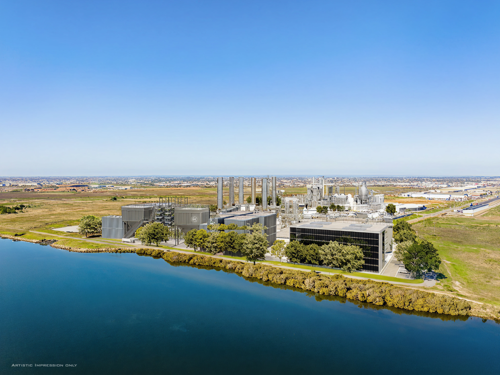
Spanning South Australia and Victoria, the projects are anchored by Australia’s first large scale methanol-to-jet SAF refinery in Port Adelaide. The funding will support engineering and development work across the integrated supply chain, from aggregating plantation forestry residues in the Green Triangle and producing low-carbon methanol through to the production of SAF, renewable diesel and other fuels.
The projects will strengthen Australia’s fuel security by establishing an integrated domestic supply chain for low-carbon liquid fuels using Australian renewable energy and plantation forestry residues. Anchored by Australia’s first proposed large-scale methanol-to-jet SAF refinery in Port Adelaide, the project would establish sovereign domestic production capability and reduce reliance on imported liquid fuels.
At full scale, HAMR Energy’s projects have the potential to process approximately 600,000 tons of plantation forestry residues each year to produce around 300,000 tons of low carbon methanol. The Port Adelaide refinery would convert that methanol into approximately 140 million liters of SAF annually, alongside renewable diesel and other low carbon fuels. Crucially, this volume of SAF could displace approximately 140 million litres of fossil fuels, abate around 390,000 tons of CO2 equivalent per annum and also facilitate approximately 4.5 million economy passenger trips between Adelaide and Melbourne each year.
Feasibility work has been completed and HAMR Energy is progressing into Front-End Engineering Design and further development activities across the supply chain. ARENA will provide $12.5 million for the initial phase, with a further $19.5 million to support detailed FEED once HAMR has secured required project co-funding. HAMR Energy expects to create hundreds of construction jobs and more than 200 ongoing roles, while supporting new opportunities across plantation forestry, renewable energy, engineering, manufacturing and regional supply chains. HAMR Energy estimates that SAF produced from plantation forestry residues through its projects could reduce emissions by approximately 85 per cent compared with fossil fuels, offering some of the best carbon abatement of any feedstock.

Comments