


INEOS Project ONE modules escape Strait of Hormuz to reach Antwerp
- The first of two critical modules for INEOS’ €5-B engineering project in Antwerp arrived after being trapped in the Strait of Hormuz for months.
- The final two modules complete the Project ONE cracker, with the second and final module expected in the coming days.
- The modules weigh approximately 7,000 tons and stand 55 meters high.
- Construction activities at the ethane cracker site now reach peak levels in Antwerp with ~2,500 workers on site.
From stuck in the strait to safe in Antwerp. INEOS has taken delivery of the first of the last two modules, at the Port of Antwerp, to complete the Project ONE cracker.
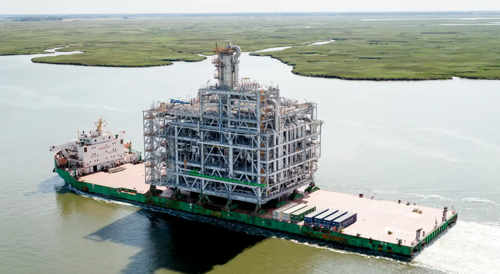
The modules were built in Abu Dhabi but their transport to Antwerp was disrupted by the war in Iran and the blockade of the Strait of Hormuz. After being trapped for months, the two ships carrying the modules managed to safely pass through the Strait, during the one- week ceasefire in mid-June, arriving in Antwerp six weeks later, via the Suez Canal.
The final pieces fall into place: two last heavyweights complete the cracker colossus. The module transported weighs 6,920 tons and is 55 meters high. As such it combines the weight of almost the entire steel structure of the Eiffel Tower with the height of a medium-sized skyscraper, making it one of the most impressive project cargoes to have arrived at the Port of Antwerp in recent years. The module exceeds the weight of the Project ONE furnaces which, arrived at the Port of Antwerp last year.
The second and final module, weighing 7,200 tons, is due to arrive shortly allowing INEOS to complete the plant.
The vessel will remain moored at the quay for a little while longer, as the steel structures protecting the module during overseas transport need to be removed. It will then be placed in position at the heart of the plant.
John McNally, CEO of INEOS Project ONE, said: “We are extremely relieved that the last two modules have arrived ‘home’ in Antwerp safely. I am already looking forward to seeing them take their final positions within the overall installation so that we can complete hooking all of our modules together and start up our cracker complex. This marks a significant milestone in the realisation of this project, which is unique in Europe.”
Modular construction concept. INEOS deliberately opted for a modular construction of Project ONE. This approach made it possible to overcome the lack of space at the Antwerp site, minimised disruption and also resulted in significant time savings: whilst process modules, crackers and pipe racks were being assembled at overseas sites, civil engineering works and the laying of foundations could begin in Antwerp in parallel. Following the phasing out of the final site in Abu Dhabi in the first quarter of this year, the focus of all activity is now in Antwerp.
~2,500 people are working on the site. Now that the civil engineering works have been completed and the final modules are being installed, the focus at the Antwerp site is on the mechanical, electrical and instrumentation work. There are currently ~2,500 workers from some 80 contractors working on site. To date, more than 14 million man-hours have been worked.
Cable laying for a total of no less than 1,250 kilometers of instrumentation and electrical cables, as well as leak tests, are currently underway. In addition, various buildings are being completed, such as the administrative headquarters, the control room and the warehouses. In the first quarter of this year, the site was also permanently supplied with power following the commissioning of the 380 kV main substation. This is a key prerequisite for starting ‘commissioning’ activities.
Commissioning is a key part of the project’s implementation, ensuring a safe and reliable start-up. During this phase, all subsystems of the installation are thoroughly tested to verify that they have been implemented safely and in accordance with the design’s quality requirements. This is carried out in stages as each subsystem is mechanically completed.
The mechanical completion of the entire site is scheduled for next summer. We aim to be able to start up the cracker in the second half of 2027.



Comments