

Sponsored: Do not gamble with mixing-and-matching tube fitting components
MATT FERRARO, Swagelok Product Line Manager
Stand almost any place in an oil or gas facility and you'll spot a small-bore fluid system with an important job that depends on leak-tight fittings. It is the kind of environment where a minor failure can cascade quickly and consequences can range from the temporarily inconvenient to the incredibly costly. It is exactly the kind of place you want to pay attention to your tube fittings and a pair of risks named intermix and interchange (FIG. 1).
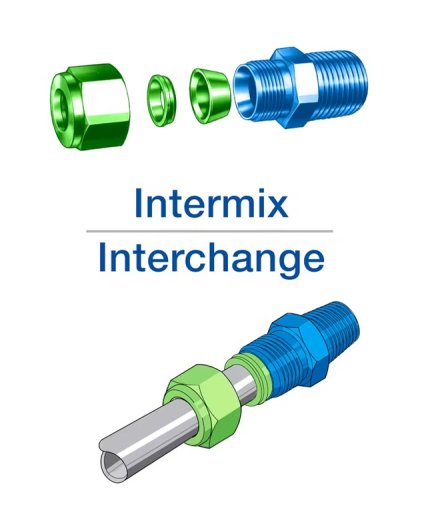
When a completed tube fitting is assembled of components from different manufacturers—a nut and ferrules from Company A, for instance, combined with a fitting tube body from Company B—it is called intermix. It is not uncommon to encounter, and you will often see fittings like this sold as “compatible” with whatever brand is on the tube. Interchange is the term for disassembling a tube fitting from one manufacturer that has been installed on a piece of tubing, and then reassembling the tubing, nut and ferrules into a tube fitting body from another manufacturer. Both introduce a high degree of uncertainty into systems which depend on proven and reliable performance.
Selecting the right tube fittings for a particular fluid system is a process built on preparation, knowledge and details, and every application has unique requirements. You need to know exactly how your fittings will perform in their specific environment, what temperatures they can handle, how they will resist corrosion and how to ensure they have been installed properly.
Because every manufacturer's engineering standards, production procedures and testing processes are different, intermixing and interchanging components will result in a fitting that is essentially a new and untested design. Fitting components from different manufacturers may look the same and have the same basic job, but unseen variables such as material composition, dimensional tolerances and surface chemistries can affect their performance in ways that may not be immediately apparent.
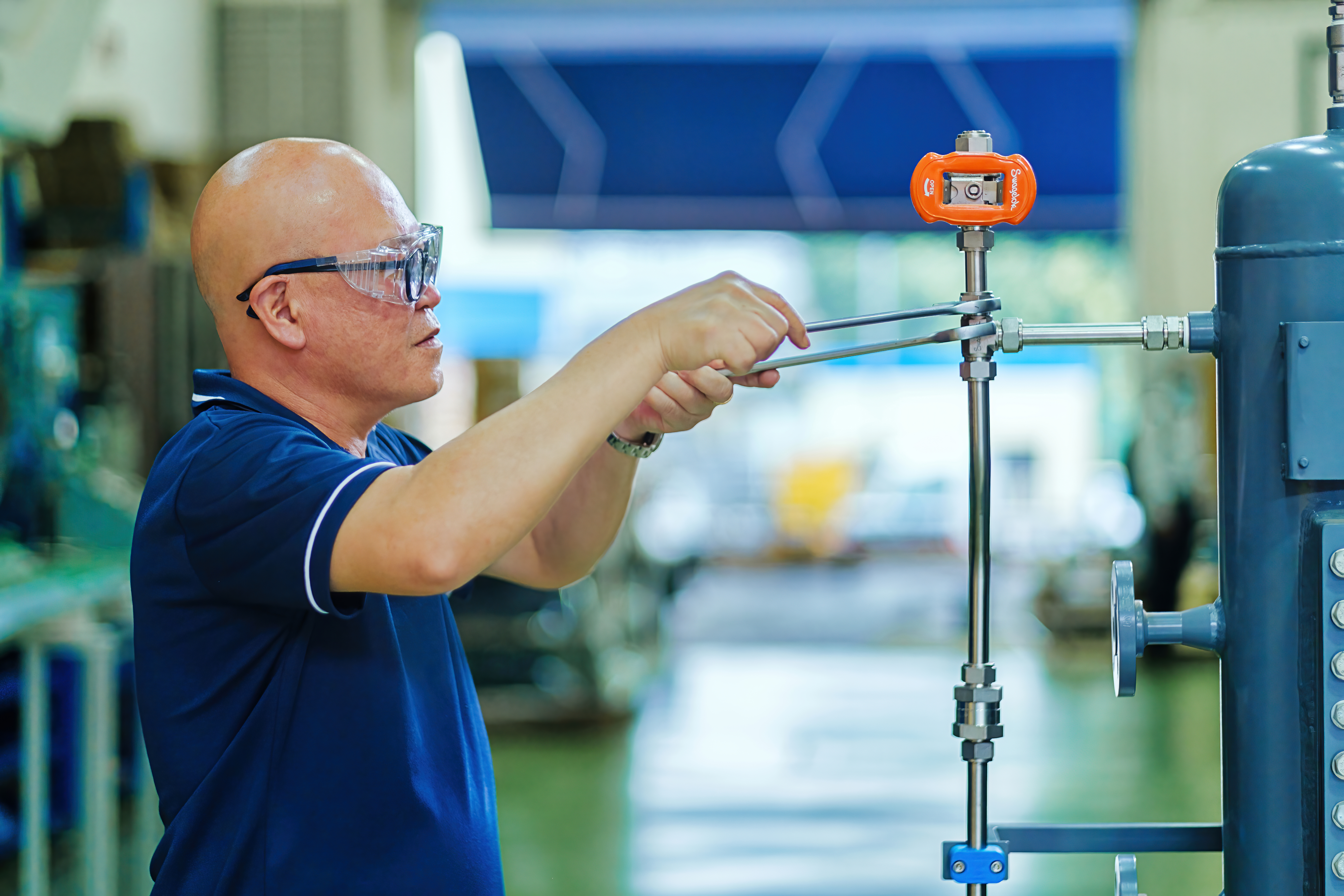
Since no industry-wide commercial design standards exist for tube fitting components, and because manufacturers do not create components explicitly designed to work with competitors' components, there are potentially significant negative consequences to intermixing and interchanging. For example, mismatched swaging mechanisms and differing torque requirements can lead to less effective sealing. A similar risk can be brought on by variations in component geometry, material properties, design and tolerances. Fitting performance can be compromised, and the risk of fatigue failure may increase (FIG. 2).
What is at stake is worker safety, downtime and costly repairs, any one of which easily outweighs any short-term savings. In fact, specification S-716 of the Internal Organization of Oil and Gas Producers (IOGP)’s JIP-33 initiative says both intermixing and interchanging of tube fittings from different manufacturers “shall not be acceptable”.
These risks are easily avoided by single-sourcing your tube fittings from one reliable supplier—but even that choice needs to be carefully considered in today's global supply chain market. Asking your tube fittings supplier about their raw materials supply and sourcing can help ensure that replacement parts are available when you need them. Additionally, look into the reach of their distribution network and inquire about lead times for both common and uncommon fitting components.
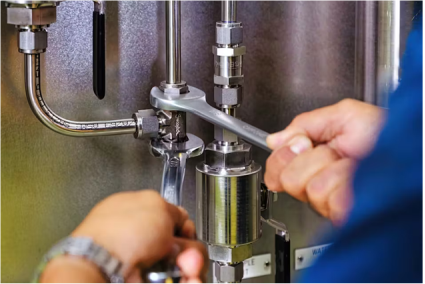
Leak-tight fluid systems are vital to the safe and successful operation of processes at practically every stage in the oil and gas industry. Avoiding intermix and interchange by working with tube fitting components from a dependable and expert supplier is a textbook example of a relatively small effort with a big return (FIG. 3).
About the author
Matt Ferraro, Product Line Manager for Swagelok Company, began his career in 2010 and has worked in various engineering, marketing and leadership roles. He currently oversees the Swagelok® tube fitting product line. Ferraro earned a BS in mechanical engineering and an MBA in strategic marketing from The University of Akron.

Comments