

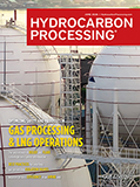
Economics
Roundtable: The skills gap: How to bridge it and how to close it
The skills gap is not a new phenomenon for the oil and gas sector. An aging workforce and increased competition for tomorrow’s technical talent have left the industry nervous about its future. On the heels of the 2019 Global Energy Talent Index (GETI), a panel of experts came together to discuss the sector’s ongoing struggle with the skills gap and what oil and gas/energy companies can do about it.
Reliability: Things rarely heard at reliability conferences
We can only guess how many reliability conferences we have attended since accepting job offers in the refining or chemical processing industries. In my case, starting in 1965, it is somewhere between 60 and 80. If, in each of these conferences I listened to six presentations, the number of sessions attended is perhaps 400.
Editorial Comment: Processing a sustainable future
An emerging topic along the entire oil and gas value chain is the move toward <i>sustainability.</i> Each company has a somewhat different definition of what sustainability means to its operations.
Onsite
Business Trends: EPC 2030: Five vital characteristics that will define the EPC firm of tomorrow
The state of the global engineering, procurement and construction (EPC) industry can accurately be described as “challenging.” Operating in an environment of volatile, uncertain, complex and ambiguous conditions, EPC firms are facing unsustainable levels of stress.
Industry Perspectives: Petrochemicals surge despite possible future roadblocks
Over the past several years, investments in petrochemicals capacity additions have skyrocketed. Hundreds of billions of dollars have and will be invested in additional petrochemicals units and complexes.
FCCU catalyst reformulations: Reducing risk and guaranteeing value with collaboration/testing
Hellenic Petroleum S.A.’s Aspropyrgos refinery is located near Athens, Greece. It has a total refining capacity of approximately 7.5 MMtpy and a Nelson complexity index of 9.7. The refinery was built in 1958 and has undergone several upgrades, including the installation of a fluid catalytic cracking unit (FCCU).
Optimization study in hydrocracker unit using simulation model
Hydrocrackers are key refinery units that convert heavy feed components into valuable lighter products. The profitability of these units is directly related to this conversion level. Conversion reactions take place in a nearly pure hydrogen environment, with the help of selective catalysts, under high pressure and high temperature. The products of the unit are separated in the fractionator section. Unconverted oil taken from the fractionator bottoms reveals the conversion performance of the unit.
A new liquid-phase isomerization process for xylene loop debottleneck and energy savings
In a typical xylene loop, C<sub>8</sub> aromatics are fractionated out of a heavy reformate C<sub>8</sub>+ aromatics stream and collected in the xylene column overhead. Then, paraxylene (PX) from the C<sub>8</sub> aromatics stream is recovered as product—usually by an adsorption or crystallization process—in the PX recovery section.
Can ammonia be a future energy storage solution?
Ammonia is well known as a fertilizer. However, it is also a potential carbon-free fuel and an excellent solution for storage of renewable electricity, especially if the syngas needed for producing the ammonia is made by electrolysis.
- Chevron Technology Ventures' Catalyst program selects RapiCure 7/15
- GEA promotes more sustainable refinery processes with energy-efficient high-performance decanters 7/15
- Ariel Green pays claim for plastic recycling facility, demonstrating protection for clean energy projects 7/15
- China taps deeper into oil inventories despite biggest drop in refining on record 7/15
- China's Sinopec establishes four business units in major overhaul 7/15
- Japan refiners to diversify crude sources, explore support for Hormuz bypass routes 7/15